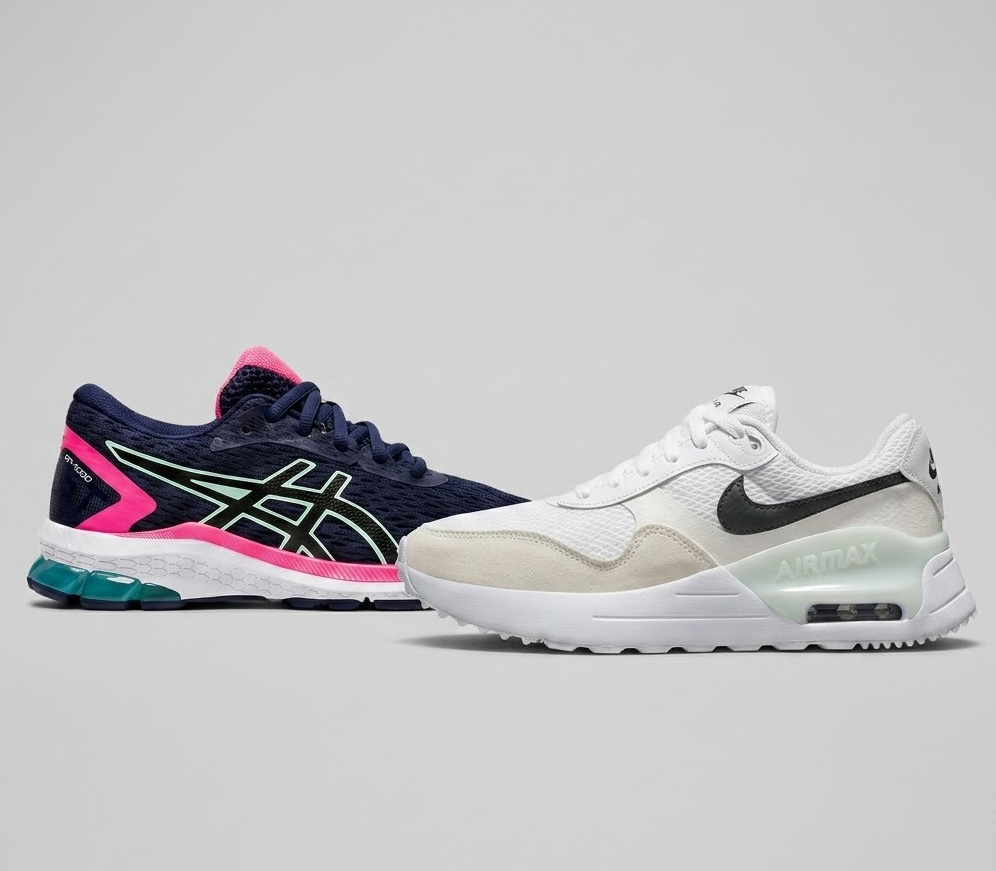
1. The Crucial Role of Footwear in Recovery
You can perform all the perfect morning stretches and follow the best recovery plans, but if you step into the wrong pair of shoes, you will immediately undo your hard work. Your footwear is the foundation of your recovery.
When dealing with plantar fasciitis, the plantar fascia band is inflamed, micro-torn, and unable to properly support the arch of your foot on its own. Every time you take a step, you place up to three times your body weight onto this compromised structure.
The right shoe acts as a temporary splint or brace. It takes the mechanical load off the fascia, allowing it to rest and heal while you go about your day. But not all "comfortable" shoes are actually supportive. Let's break down exactly what you need to look for.
2. Feature 1: Firm, Structured Arch Support
This is non-negotiable. When you stand up, your arch naturally flattens out slightly to absorb the shock of your body weight. This flattening motion stretches the plantar fascia. If your fascia is already inflamed, this stretching is what causes that sharp, stabbing pain.
A shoe with proper arch support physically prevents the arch from collapsing too far.
To test a shoe's arch support, try to bend the shoe in half by pushing the toe toward the heel. A good shoe should bend at the ball of the foot (where your toes naturally bend), but it should remain rigid and unbending through the middle (the arch). If you can easily twist or fold the shoe in half, it lacks the structure necessary to protect your fascia.
3. Feature 2: The Right Heel Drop
The heel drop of a shoe is the difference in height between the heel and the toe. A completely flat shoe (like traditional Converse, Vans, or minimalist barefoot shoes) has a zero heel drop.
When recovering from plantar fasciitis, zero-drop shoes are your worst enemy.
A completely flat shoe forces your Achilles tendon to stretch to its maximum length with every step. Because the Achilles is connected to the plantar fascia via the heel bone, stretching the Achilles automatically pulls tight on the plantar fascia.
- Look for shoes with a mild to moderate heel drop (usually between 8mm to 12mm).
- Running shoes and structured walking shoes naturally have this built in.
- This slight elevation of the heel takes the tension off both the Achilles tendon and the plantar fascia, giving them room to heal.
Pro Tip: Avoid High Heels
While a slight lift is good, a massive lift (like stiletto heels) throws your entire biomechanics off and puts excessive pressure on the ball of the foot. Stick to supportive sneakers or recovery shoes with a sensible drop.
4. Feature 3: A Rigid Heel Counter
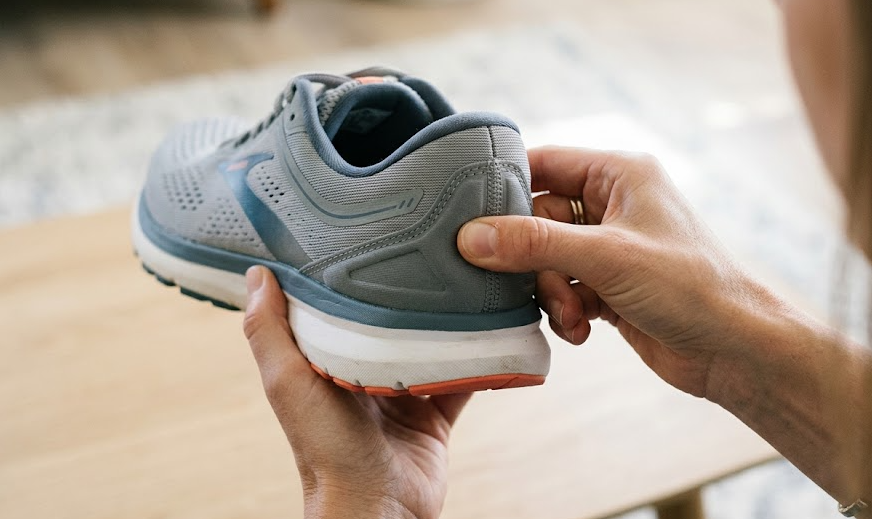
The heel counter is the hard piece of material at the very back of the shoe that wraps around your heel.
Many cases of plantar fasciitis are worsened by "overpronation"—when your foot rolls too far inward as you walk. A rigid heel counter locks your heel bone in place, preventing this excessive rolling and keeping your foot in a neutral alignment.
The Squeeze Test: Take your thumb and index finger and squeeze the back of the heel cup. If it easily collapses under your fingers, the shoe won't control your heel. If it feels firm and resists your squeeze, you've got a winner.
5. The "Squishy Shoe" Trap
This is the most common mistake people make when buying shoes for heel pain. You are in pain, so you naturally gravitate toward the softest, squishiest memory foam shoes you can find.
While these feel like walking on clouds for the first ten minutes, they are terrible for plantar fasciitis.
Think of it like trying to sleep on a mattress that is too soft. It might feel cozy initially, but you wake up with a terrible backache because your spine had no support. Your feet are the same. Squishy shoes provide zero resistance to the collapsing arch. Your foot has to work twice as hard to balance on the unstable, squishy surface, leading to rapid fatigue and increased inflammation.
You want firm cushioning, not soft squish. The shoe should absorb shock, but it should push back against your foot to provide stability.
Caution: Worn-Out Shoes
Even the best shoes lose their structural integrity after 300 to 500 miles of use. If the tread on your favorite running shoes is worn smooth, or if you can see deep creases in the foam midsole, the support is gone. It's time to replace them.
6. The Golden Rule: Never Walk Barefoot
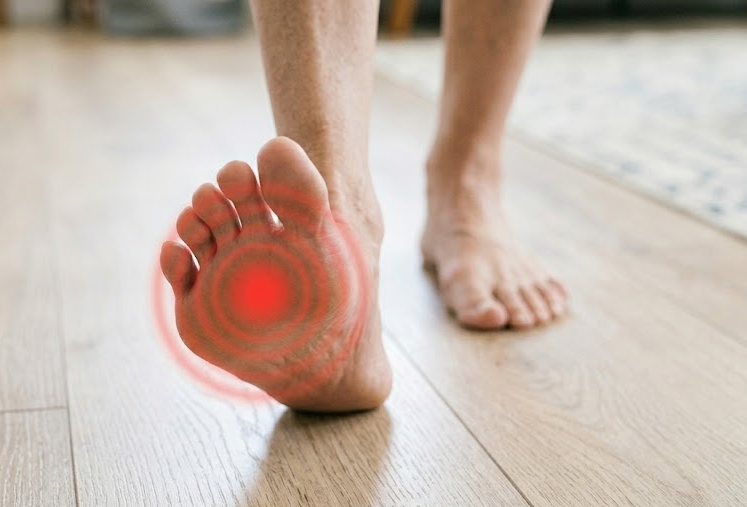
If there is only one piece of advice you take from this guide, let it be this: Do not walk barefoot while recovering from plantar fasciitis.
Hardwood floors, tiles, and laminate are brutal on unprotected fascia. When you get out of bed in the morning, or when you are relaxing at home in the evening, you must protect your feet.
- Keep a dedicated pair of "indoor only" shoes next to your bed.
- Consider purchasing specific recovery sandals (like OOFOS or Archies or HOKA recovery slides) or supportive APMA-approved orthopedic slippers to wear around the house.
- Do not use flimsy, flat slippers. Your indoor shoes need the same arch support and heel cup features as your outdoor shoes.
The Bottom Line
Your footwear choices can either accelerate your healing or keep you trapped in a cycle of chronic pain. By prioritizing firm arch support, a slight heel drop, and a rigid heel counter over purely "soft" shoes, you create the optimal environment for your plantar fascia to recover.
Pairing the right footwear with a structured daily stretching and strengthening routine is the fastest way to get back to walking pain-free.